Language
The Power of Egypt
One might wonder how powerful ancient Egyptian words ended up in European languages. We had a theory which has led to a book:
Secrets of the Vatican - Vault 42 Opened.
Transmission 16 reveals horsemen’s actions across linguistics, religion, and Egyptian Wisdom. It offers a fascinating and astonishing mix of colonial inversions across cultures, languages, and filosofy.
Guided by Source and divine pattern recognition, you'll be led to a meeting point of two rivers. A transmission. A celestial blend of revelation, initiation, and restoration, offering an access key to a living code.
On this page you find a small glimpse of our findings!
Multiple Languages 1
Heh
is a common expression in the English, Dutch, German, French etc. language. Heh is an interjection for:
an exclamation of surprise or inquiry
a restrained, ironic acknowledgment
I see it, and I'm thinking, yeah, figures.
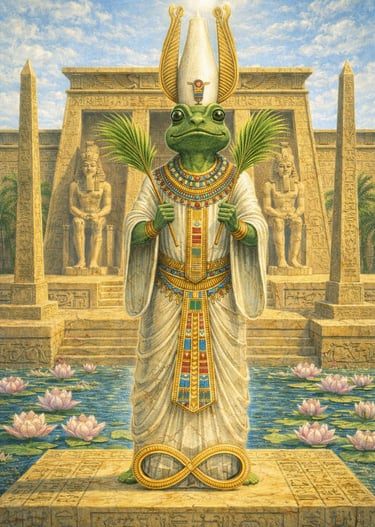
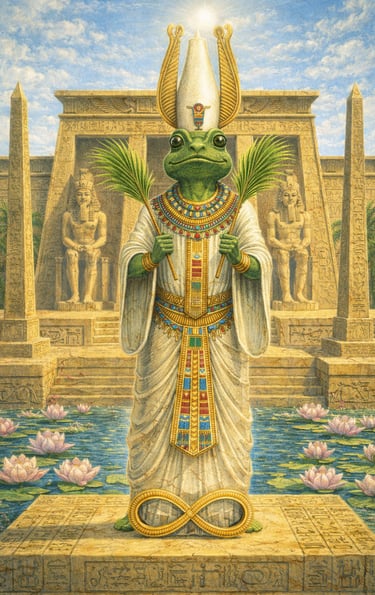
The root of Heh however is found in Egypt. The god Heh embodies infinity and eternity in our Ogdoad.
Multiple Languages 2
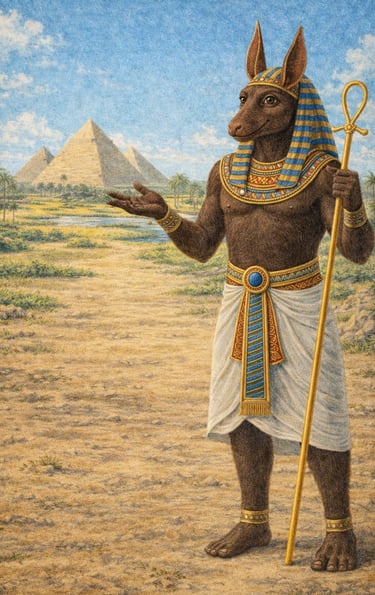
Seth
In many dictionaries we found the god Set hidden in a verb
to put something in a particular place or position or a noun e.g., tea set.
The French incorporated Set into a tennis match,
Manche d'un match de tennis, etc.
structured in the order:
Point → Game → Set → Match Set also became a controlled, physical environment where filming for movies, TV series, commercials, and other productions takes place.
Multiple Languages 3
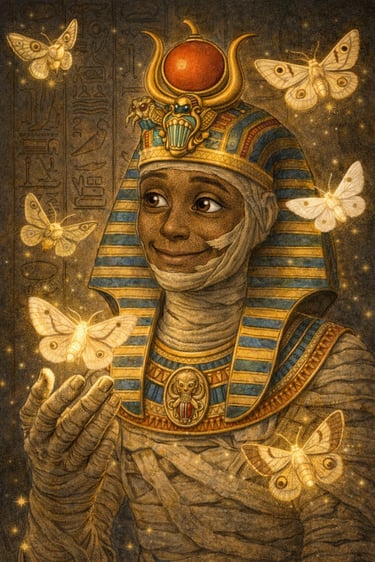
Mot
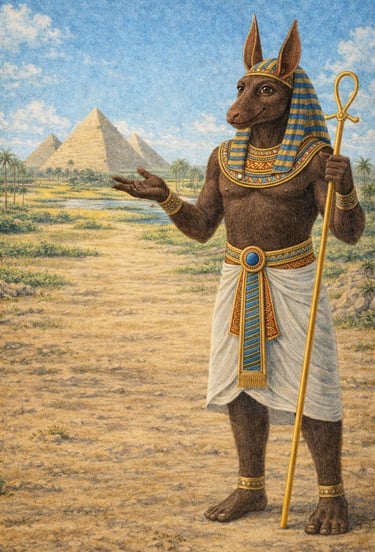
The god Mot is associated with a Dark Night of the Soul experience, where one has endure loss to experience the feeling of being born again.
In French, the word Mot means word.
Mot à mot: Word for word.
In Dutch the word Mot (Moth insect) is used in idioms for speechlessness or conflict.
In Norwegian, the word Mot has two primary, very common meanings.
1. Mot, a noun – courage, bravery, guts
2. Mot (as a preposition) – against, towards
In Vietnamese Mot equals 1.
Moths, the insects, symbolises transformation, spirituality, and a Soul's journey. They are messengers from beyond.
Multiple Languages 4
Ba = hello
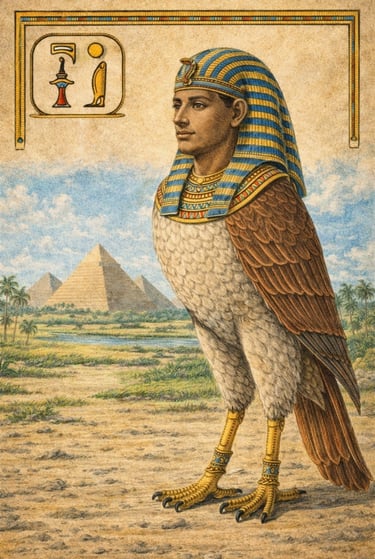
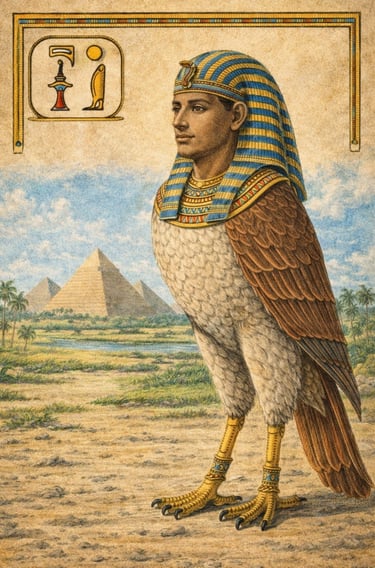
The bꜣ conventionally pronounced Ba is a crucial component of a human being. It is also known as soul. That what stays with you across lifetimes. It stays with you, even when your current fysical body has run its course. It is a force of life. Once's will.
Once's ba can move, act, and connect an individual to a spirit world, a realm of awakened divinity; goddesses, gods, and archetypes.
Horsemen created a silencer for this energy. Ba of aSoul, sounds the same as bah.
An interjection that is remarkably widespread across European languages, almost always with the same core meaning of disgust or contempt.
Its core function is to verbally brush something aside while a divine spirit uses its fuel.
Something to think about the next time you say bah!
Ba = You. Your personality, your mind.
One is the self that must return, the other is a sound that pushes away.
Comparative Religion
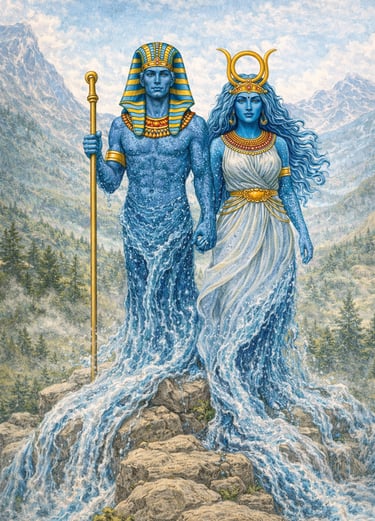
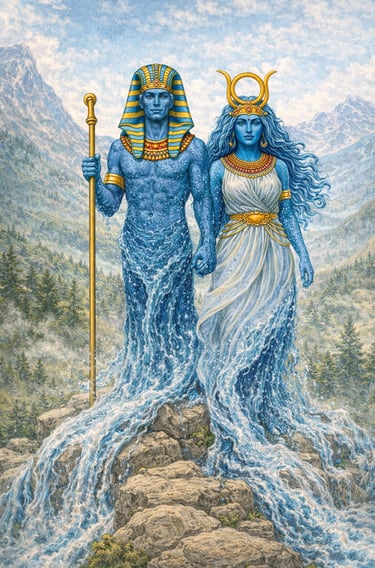
Naunet & Nun are primordial deities embodying purified water where creation happens.
Horsemen said: The god Atum (or Ra-Atum) states, "I evolved from the primeval waters which were Nun."
In the Bible the word Nun was assigned to Joshua, a son of Nun. His name likely means "fish" or "perpetuity" in Hebrew.
Nun was also inverted to a member of a religious order for women in the Catholic, Orthodox, and some Anglican/Protestant traditions.
In Semitic wisdom her is a lady. Asera. Her in Hinduism is Laxmi. 2 ladies representing divine energy of purity, divine consciousness. Water.
When Stars Re-Unite
Miss Asera played it by ear as she took a divine calling to Egypt.
Guided by Good Spirit, Asera learned our Divinity was hidden in everyday language. Horsemen banned Egyptian wisdom, saying it was 'crazy!'
What they forgot to tell you in school in a case of severe historical amnesia:
Horsemen themselves:
- inverted wisdom
- repurposed energies
- renamed divine energies to a negative
- and stripped humanity of a ladies' power
How? By colonial theft.
Miss Asera uncovered their engineered tricks, topping out ceremony while restoring humanities' divine blueprints. An ascension begins.

Multiple Languages 5
Khat
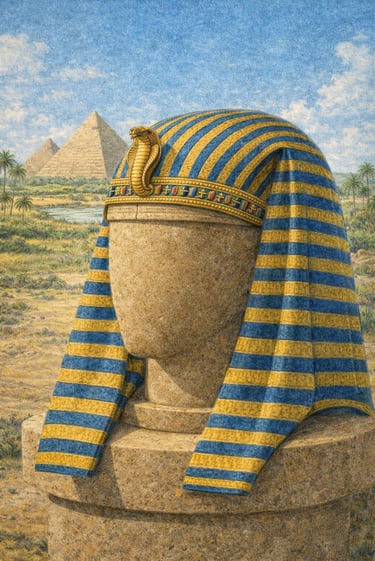
In ancient Egyptian, the word Khat 𓎛𓏏𓏏𓏜 refers to the physical body. Together with the spiritual aspects of a person like the life force Ka, the personality/soul of Ba, and the transfigured spirit of Ak. It's preservation is a cosmic and spiritual necessity.
The pronouncing of Khat resembles the Dutch word for "gat" meaning "hole" or "gap" and the colloquially profane word "buttocks."
In Russian/Ukrainian the word хат meaning hut, barracks, hovel. It is phonetically the same as Khat.
In Kazakh language хат means letter.
Without the colonized h muet in Khat the word becomes kat in Dutch, leading back to Bast, the cat goddess.
Khat is also the name of a plant, known as bushman's tea. The leaves are chewed or made into tea and contain a substance that acts as a stimulant.
Dutch 1
Kek is one of the eight primordial gods of the Ogdoad of Hermopolis, the panteon representing the void state of the cosmos before creation.
His female counterpart is Kauket. Together they represent the primordial void. The in between state before a new reality emerges.
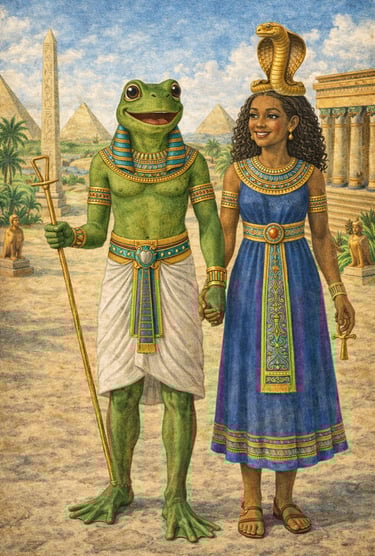
Kek is depicted as a frog-headed man or as a serpent, revealing his power of transformation. His counterpart Kauket is depicted as a snake-headed woman or a snake, revealing her eternal life wisdom.
In Dutch kek is a noun
Meaning: (of clothing) with a stylish, youthful appearance
Synonym: fashionable