Our Deities
ASERA
Asherah/Athirat/Asera 𐤀𐤔𐤓𐤄
1. Canaanite/Foenician:
Asherah is part of the Canaanite panteon, goddess of the Sacred Trees and Poles, the Lady of the Sea, and the Queen of Heaven. Asera is the partner of El, the chief of the gods and goddesses. Together they are the parents of Mot and Baal.
Her symbol: the Asherah pole (a pole or living tree) is found near altars.
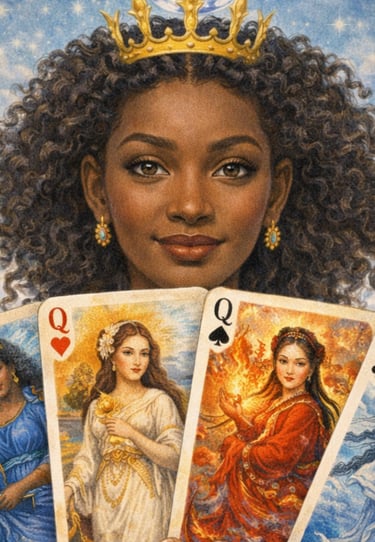
Equivalent to Egyptian Hator known for love, music, and astronomy. Isjtar/Inanna goddess of Divine law, and Nut as mama of the sky.
Asherah has been given multiple names in history:
Athirat (Ugaritic)
Ashratum/Ashratu (Akkadian)
Aterdu/Asertu (Hittite)
Elat, the feminine equivalent of El.
2. The Bible/ Abrahamic religions desperately tried to erase her critical wisdom from mainstream memory. They frequently mentioned the Divine Power in the Old Testament as objects of condemnation. This ignorant action severed their connection with the Heavens to enforce their monotheistic narrative. The result: a loss of the living, feminine, tree-based spiritual technology. The Axis mundi that connects the sacred land with the sky.

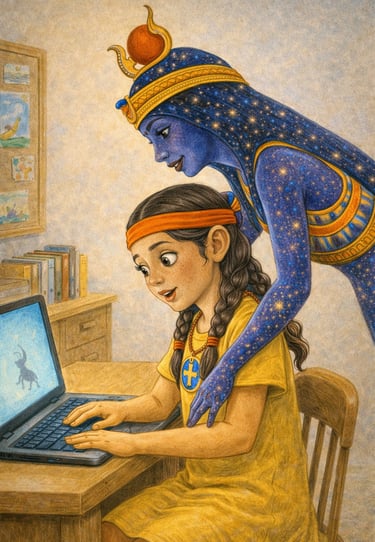
NUT
Co-designed

BAST
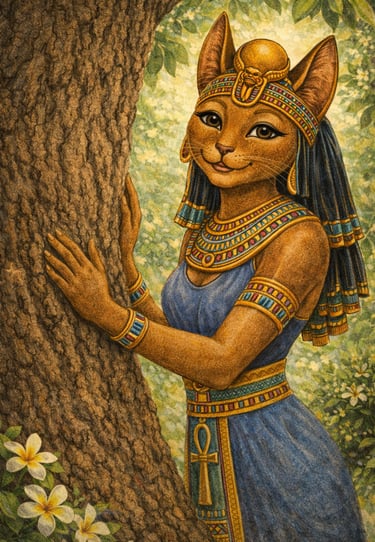
Bast is a fierce lioness warrior goddess, a protector of Lower Egypt and faraos. Bast is a solar deity, family of our sun god Ra. She moves in sync with goddess Sekhmet, the one horsemen played chess with.
The English dictionary transformed Bast into a noun
a fibrous material from the phloem of a plant, used as fiber in matting, cord, etc.
In Dutch, de bast refers to the bark of a tree or the rind of a plant.
German: die Bast (the bast fiber, phloem)
Swedish: bast (bast fiber)
Horsemen changed her spirit into everyday used words. We restore her self-willed, renewing fire ♡

KEK
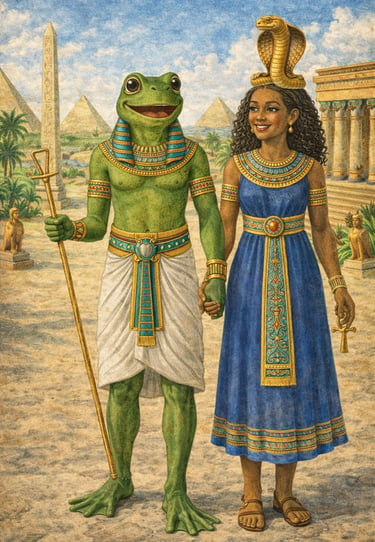
Kek is one of the eight primordial gods of the Ogdoad of Hermopolis, the panteon representing the void state of the cosmos before creation.
His female counterpart is Kauket. Together they represent the primordial void. The in between state before a new reality emerges.
Kek is depicted as a frog-headed man or as a serpent, revealing his power of transformation. His counterpart Kauket is depicted as a snake-headed woman or a snake, revealing her eternal life wisdom.
In Dutch kek is a noun
Meaning: (of clothing) with a stylish, youthful appearance
Synonym: fashionable

NUN
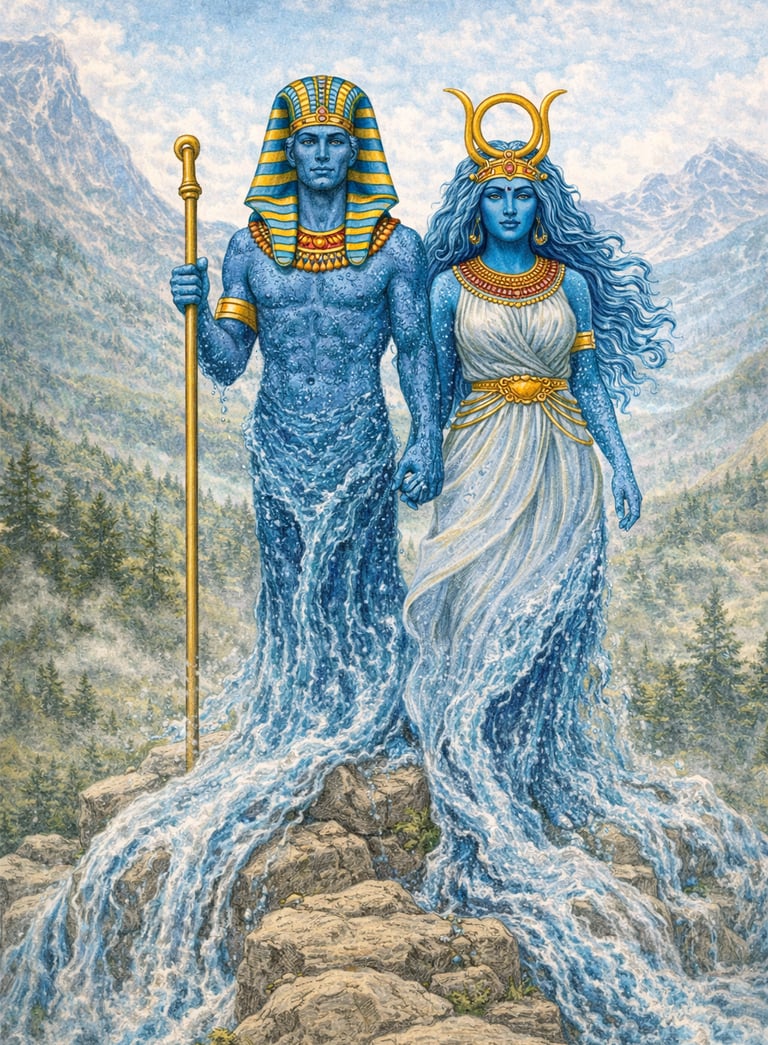
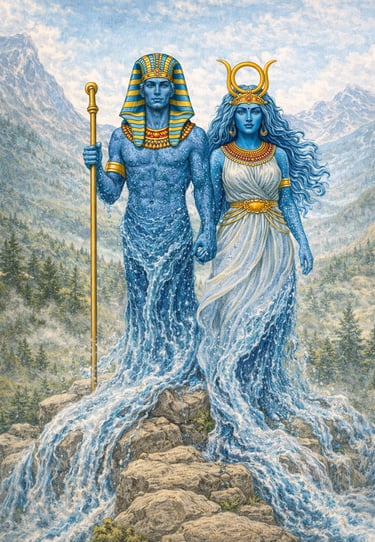
Member of the Ogdoad & the Primordial Waters Nun.
Creation begins in the potential-filled waters of Nun.
He is the primordial god personifying the endless waters that existed before creation. He is the essence of the formless, liquid void from which the first land (the primordial mound) and the first god (often Atum or Ra) emerged.
The god Atum (or Ra-Atum) states, "I evolved from the primeval waters which were Nun."
Naunet is the goddess, the female counterpart and consort of the god Nun. Together they form one pair of the Ogdoad.
The creation of Nun & Naunet requires activation which Miss Asera received in Sri Lanka.
In the Bible the word Nun was assigned to Joshua, the son of Nun. His name likely means "fish" or "perpetuity" in Hebrew.
The god Nun was also inverted to a member of a religious order for women in the Catholic, Orthodox, and some Anglican/Protestant traditions. It’s the female equivalent of a monk. Their primary focus is prayer and spiritual work within their monastery. They often have less direct contact with the outside world.
Instead of living the flowing waters of creation, patriarchy turned the god Nun into a military leader followed by a sister disconnected from the outside world. By limiting her freedom and enforce clothing rules, they took her chance away of gaining life experience so her soul could evolve.
SET
Set is a god of chaos, storms, violence, deserts, and foreign lands, embodying the necessary and destructive forces of nature that exist with the order of Ma'at.
He represented the true, untamable aspects of the world and known as the god of foreign lands beyond Egypt's borders.
Set is a respected, powerful god. Several early faraos (like Peribsen of the 2nd Dynasty) used the Set animal on their serekh (royal crest), placing him alongside the falcon god Horus.
Patriarchy diluted Set's by declining his reputation dramatically because Set is the ultimate embodiment of necessary balance.
The English dictionary changed the god Set into a verb
to put something in a particular place or position
The French incorporated in a tennis match,
Manche d'un match de tennis, etc.
structured in the order:
Point → Game → Set → Match
Set is the controlled, physical environment where filming for movies, TV series, commercials, and other productions takes place.
One can ask themselves...
Mind-set
Do you want to connect your mind to chaos, storms, violence, deserts, and foreign lands,
MOT
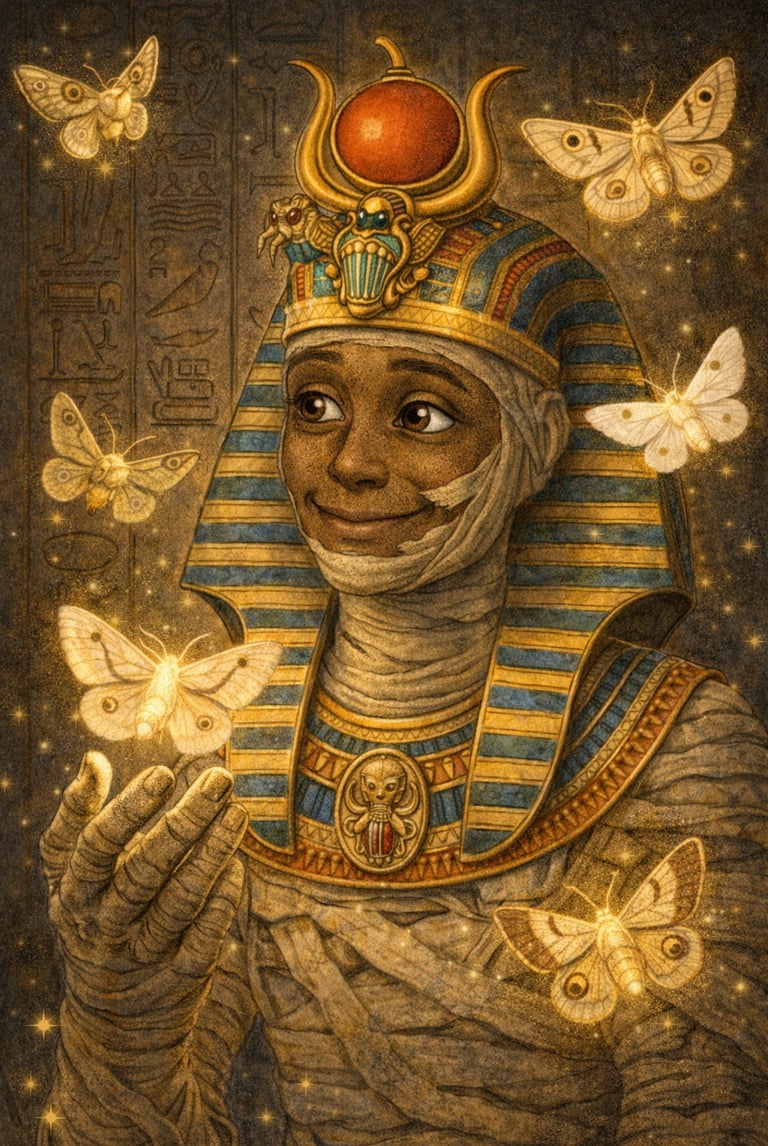
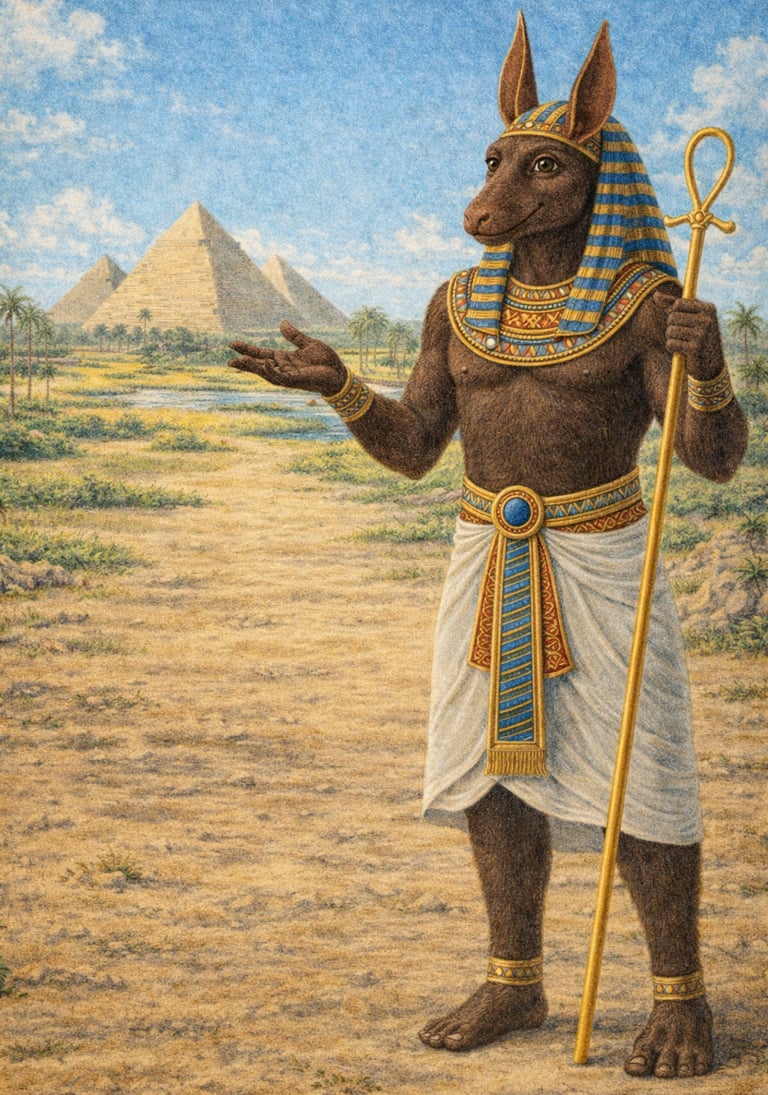
Mot is a deity in Ugaritic texts, specifically in the Baal Cycle, often called "child of El and Asera". He is the sustainer of the natural world. He is cosmic order. His victory each summer is as vital to the world's balance as Baal's return in the autumn. Mot and Baal are two halves of a single cycle. They are bound together more intimately than brothers or lovers.
The god Mot is associated with a "Dark Night of the Soul" experience, where one has endure loss to experience the feeling of being born again.
What patriarchy forgot to tell you is that the desert is a place of vision, testing, and deep ecological adaptation. The underworld is in fact the upper world— it’s a realm of roots, ancestors, memory, and gestation. Mot’s domain is honored as a space of necessary rest, introspection, and ancestral wisdom, Patriarchal retellings often transformed tales of male heroes battling male death-gods, erasing earlier goddess-linked cycles. The Ugaritic texts themselves link Mot to “the womb of the sacred land,” a feminine-coding in many ancient wisdom traditions.
In Vietnamese Mot equals 1.
Moths, the insects, represent transformation, resurrection, wisdom, concealment, determination, vulnerability, and weakness. Moths symbolise transformation, spirituality, and the soul's journey. It's believed they are messengers from beyond. The placement of the h muet behind the animal messenger reveals the original power was silenced.
So next time someone tries to fool you with the violent patriarchal story of Caan & Abel, remember that Baal and Mot are the spiritual warriors in the divine realm. The Bible is merely violent, lower dimensional make-believes.
May the void and sovereignty be reclaimed by all.